Internet Access and the “Arab Spring”

I’ve now updated my “Internet Access” data and was happy (but not surprised) to see the number of people able to access the internet globally increase by quite  a bit. The numbers, however, are still from 2010 and I suspect that in 2011, they will have really started climbing. (I’m looking for reliable data on this but haven’t stumbled across any yet — can’t wait till I do!)

Though most of the countries increased by just a few percentage points, there were some standouts; Bosnia (around 15% increase), Chile (11%), Croatia (10%), the Dominican Republic (almost 14%), Israel (15%), Panama (15%) and Qatar (almost 40%!).

(There were also some inexplicable declines especially in Europe which I can only assume were earlier corrections of data, i.e., Iceland decreased from 98% to 95.8%. The Ukraine also declined from 33% to 22.8%. Not sure at all what this means but overall global numbers went up which makes more sense. Maybe problems with cost started to become an issue in some of the European countries where this seemed to be happening most.)

One country that stands out particularly in the rapid transition to an internet-connected population, is Kenya, which went from 10% to 25.9% of their population having access to their internet by the end of 2010. And this ties in to one very interesting aspect of internet connection which is the degree to which it has allowed for the coordination of political opposition. (I’m pretty sure the numbers of internet-connected citizens in the “Arab Spring” countries will have gone up by quite a lot during 2011.) Kenyans used the internet extremely effectively to spread the word about politically motivated brutal attacks in post-election violence in 2007-2008.

Could the increase in internet access across Africa signal an “African Spring,” and the overthrow of some of the seemingly-unmovable “dictators for life”? As the African continent connects to the rest of the world with impressive alacrity, not only will we find out, we’ll see every moment.

Thanks for stopping by,

Heather McC

Education Index

Last night I updated my global “Education” numbers with more recent data (2011!) from the UN’s Development Programme site, and was at first extremely disappointed to see a decline across the board. (I actually had to walk away from the computer for a bit!) However, after closer examination, I realized that the data model I had been using previously (from Wikipedia’s entry on the U.N. Education Index) had been updated to reflect a more ambitious target including secondary education.

I’m still a bit ambivalent about these numbers — I just really didn’t want to see them go down, sometimes by as much as 20% — but am slowly accepting that the higher goal of universal secondary school education is admirable. So, I’m hopeful that, going forward, we will see increases. (Except for New Zealand which is at 100%!) I also want to delve further into these numbers to find out exactly what they mean and how they are being measured. (And if any of my education friends out there have any thoughts or opinions on measuring education attainment globally, I would love to hear them!)

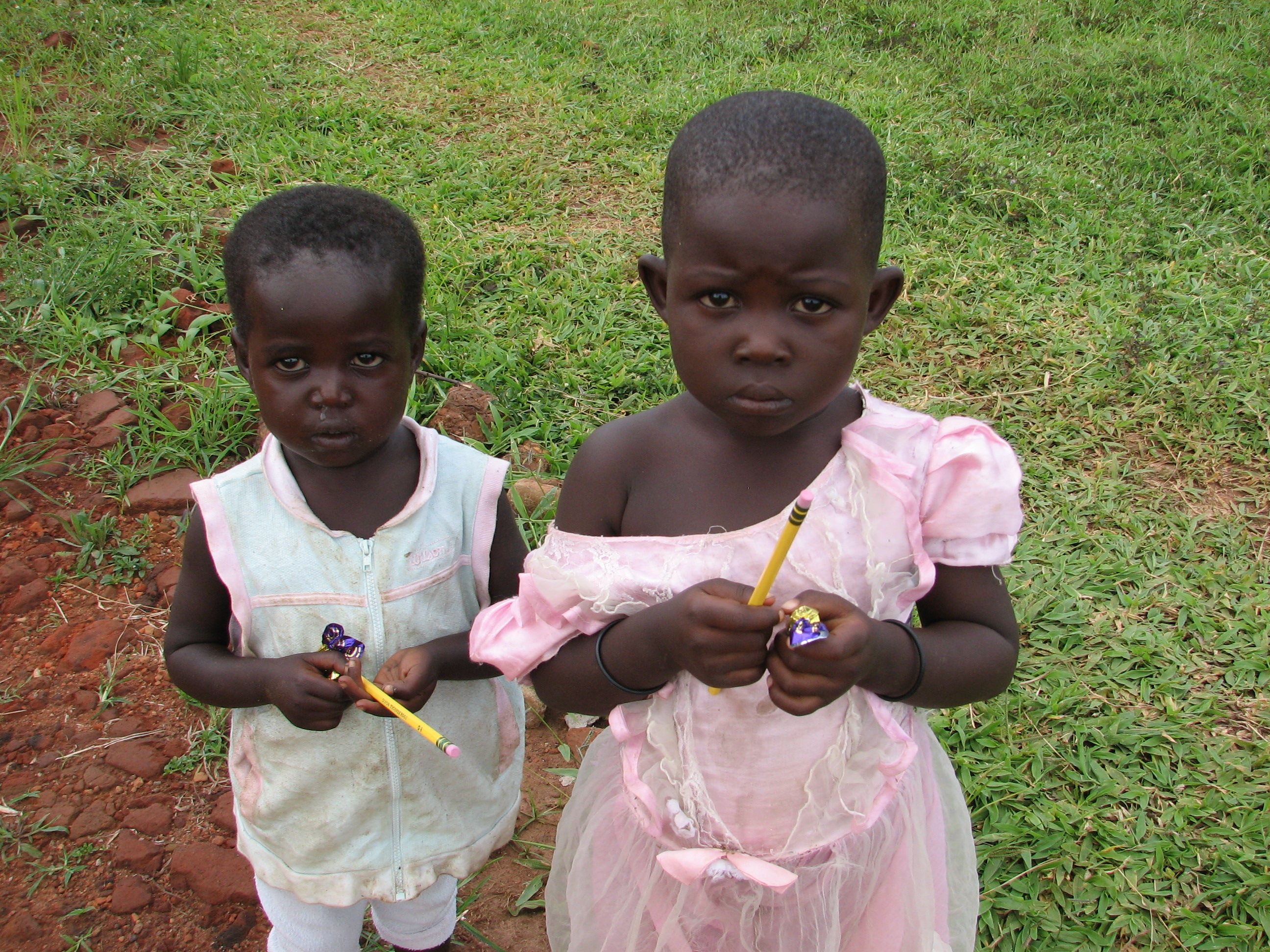
Children at Divine Hope school near Jinja, Uganda

Sometimes, it’s just good to take a step back to get some perspective. In 2008, my friend Alan Locke invited me to go to Uganda to be a part of opening a clinic there that he had helped fund. He had also helped found and supports two schools which provide education to HIV/AIDS orphans, and which currently enroll around 1,000 children, after starting a few years ago in a hut with about 40 kids. (The charity is AROH and you can find out more at the website we’ve created. I will be talking about them more — my Uganda trip was a lifetime of learning experiences!) Anyway, we handed out pencils to the kids (they’re more practical there than pens) and it will always amaze me that, when we went back the next day, a lot of the kids were still holding those pencils — they were like gold because they offered the promise of education and a better life.

So, as much as I worry about the future of the world sometimes, I also remember those kids and their absolute determination to get an education, and that is an encouraging thought.

Thanks for stopping by,

Heather McC
Infant “Un-Mortality” Rates Improving

I’ve been looking forward to updating these numbers for a while now and finally had the chance last night. I’d been using this information from Wikipedia (btw, if you are trying to access this and any other Wikipedia site on Wednesday, Jan. 18 you may not get through because they’ve gone on “strike” for the day), but was really excited when Unicef released new numbers finally. The 2010 numbers are available in their Child Mortality Report 2011. (It’s in pdf format so you’ll need Adobe Reader.) One more technical note: in keeping with my positive take on my quest for 100%, I am subtracting the infant mortality rate from 10. (So it’s really an “Infant Survivability” or maybe “Infant Un-mortality” rate!)

What I found was just astonishing, and truly good news. Almost every single country listed had an increase, even if it was only a tenth of a percent! The European countries, which already have extremely low infant mortality rates, even improved, especially in Eastern Europe. (Oddly, most seemed to settle at 99.7% for some reason.)

Latin American, Asian, but most especially African countries all seemed to improve with a few standouts:

  • The Democratic Republic of Congo (DRC) actually improved 1% despite the horrible and continuing conflict there. (I am amazed at the commitment and strength of women and medical personnel to saving children’s lives there that this reflects.)
  • Liberia and Zambia improved almost 5%.
  • Malawi and Rwanda did improve by 5%.
  • And even Sierra Leone, which has been wracked with conflict showed an improvement of almost 2%.

From the report, “Since 1990 the global under-five mortality rate has dropped 35 percent—from 88 deaths per 1,000 live births in 1990 to 57 in 2010.  Northern Africa, Eastern Asia, Latin America and the Caribbean, South-eastern Asia, Western Asia and the developed regions have reduced their under-five mortality rate by 50 percent or more.”

We still have a ways to go, 21,000 children under 5 dying every day, is still way too many. but, according to the report, the rate of decline has accelerated. We are getting there! Wouldn’t it be amazing if we were to see this rate get to 99.99% Survivability within our lifetimes?

Thanks for stopping by,

Heather McC

PS. A quick addition/caveat to this post after perusing the news some more over the week. With recent global food prices increasing and some severe food shortages in some countries (especially East Africa), I am less optimistic that infant mortality rates will show a decline in 2011. Another concern which has also come up is the possibility that some countries are under-reporting infant mortality but, with global transparency increasing, I am hopeful that this will occur less and less over time.

Drops in the Bucket

As I mentioned in my previous entry on Clean Water, we’ve made some surprisingly decent progress over the last decade getting potable water to people all over the world. That said, we’ve still got a ways to go. Today’s Los Angeles Times had an article, Adding up the water deficit, on the slowly declining water resources in the American Southwest, the lack of preventative measures being taken, as well as the blunt possibility that there just may not be anything we can do about it if a natural “megadrought” comes along (which has happened in the past, decimating Native American communities living in vulnerable areas).

But sometimes people decide not to wait for the government, or anyone else, to fix things for them. I’ve come across some interesting solutions to water problems across the world recently, and thought I’d share:

We’re going to need a lot more of these kinds of solutions to get through the next 100 years or so, but I’m encouraged by the ingenuity of what people all over are coming up with. It would be great if some of our governments would follow their example.

Thanks for stopping by,

Heather McC

The Good News about Hunger

What I am about to say may surprise you: we are actually, slowly but surely, winning the battle to end chronic hunger and even malnutrition. If you watch the news at all, you probably won’t believe me. But it’s true. Thirty-five years ago, around 45,000 people a day were dying of chronic hunger and hunger-related causes. Today that number is closer to 25,000. In no way, shape, or form is that acceptable, and we need to keep fighting, but this is an incredible feat we need to occasionally stop and remind ourselves of, and it’s even the remarkable given that the world population has increased significantly over this time period.

I updated my “Food” numbers yesterday and was happy to see the actual figures reflecting the above facts. (Unfortunately, I am on the lookout for much more accurate numbers — the ones I had been using were from a Wikipedia page, List of countries by percentage of population suffering from undernourishment but the most recent data was from 2006. I found more recent data last night, trying to delve through the myriad, byzantine website that is the UN, and found a site on the MDG’s which I was able to use, but this data is only from 2007. Suggestions welcome!)

Even though the data is not completely up-to-date, it did show an improvement in many countries, which was heartening. I know that we have slid backwards lately, due to food price increases, natural catastrophes, and conflicts, but I am hopeful that, in some countries at least, this downward trend in malnutrition has continued.

One country that is now at 95% “nourished” (which is the highest the UN numbers would go — the “100’s” on my Google doc are from other sources) is Ghana, which was at 92% in 2006. One of the organizations I support, The Hunger Project, is active in the country and you can see exactly how their strategy has worked here.

As the world has reached out over the last few decades to countries whose populations are suffering from hunger, we’ve also learned a lot about what works and what doesn’t. In recent years, the aid community has become increasingly self-reflective and this examination has revealed some ugly truths.

  • Throwing money and/or stuff at the problem doesn’t work — trillions of dollars (pounds, francs, euros, etc…) have been wasted on this strategy. (See Dambisa Moyo’s groundbreaking book, Dead Aid for a very honest — albeit no-punches-pulled — account.)
  • Building stuff is not always helpful. (See this recent talk by David Damberger at TED.)
  • Sometimes even help is not helpful, as when well-meaning but ill-informed aid workers in the DRC provided relief to Rwandan refugees during the 1994 genocide only to find out later that many of these same people went back to Rwanda and continued their slaughter. (This was outlined by David Rieff in his brilliant 2002 book, A Bed for the Night: Humanitarianism in Crisis.)

So what have we found that does work? One strategy that is slowly being acknowledged by the aid community is to simply listen to what those who you want to help have to say. That’s a great starting point. Much more on this later.

Thanks for stopping by,

Heather McC